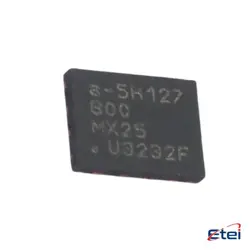
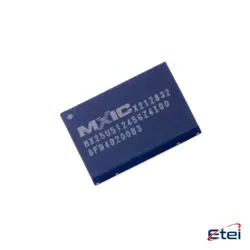
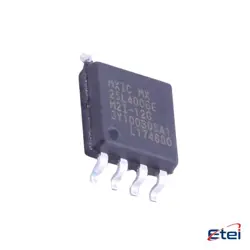
規格
| 屬性 | 價值 |
| Package | Tape & Reel (TR),Cut Tape (CT) |
| ProductStatus | Active |
| Applications | USB, Type-C Configuration |
| Voltage-Supply | 2.7V ~ 5V |
| OperatingTemperature | -40°C ~ 85°C |
| MountingType | Surface Mount |
| Package/Case | 12-XFQFN |
概述
Description
The TUSB320LAIRWBR is a USB Type-C port controller developed by Texas Instruments. It is designed to simplify the implementation of USB Type-C connectors in electronic devices, supporting USB Type-C and USB Power Delivery (PD) applications. The controller offers essential features like cable and plug orientation detection, role detection for both data and power, and mode configuration for downstream facing port (DFP), upstream facing port (UFP), or dual-role port (DRP) applications.
The TUSB320LAIRWBR is notable for its low power consumption and small package size, making it suitable for compact and energy-efficient designs. It works seamlessly with a wide range of host controllers and provides a straightforward integration process, aiding in the transition to USB Type-C standards. This device is particularly useful in consumer electronics, mobile devices, and other applications requiring robust USB Type-C connectivity. Additionally, it supports I²C or GPIO control, offering flexibility in design and implementation.
The TUSB320LAIRWBR is notable for its low power consumption and small package size, making it suitable for compact and energy-efficient designs. It works seamlessly with a wide range of host controllers and provides a straightforward integration process, aiding in the transition to USB Type-C standards. This device is particularly useful in consumer electronics, mobile devices, and other applications requiring robust USB Type-C connectivity. Additionally, it supports I²C or GPIO control, offering flexibility in design and implementation.
Equivalent
The TUSB320LAIRWBR is a USB Type-C configuration controller. Equivalent products include:
1. ON Semiconductor FUSB302B: A USB Type-C configuration controller.
2. Cypress CYPD1120: Part of the EZ-PD™ CCG1 family, suitable for USB-C applications.
3. NXP PTN5100: A USB Type-C controller for power delivery applications.
4. Microchip UPD350: A USB Power Delivery controller supporting Type-C connectors.
These alternatives provide similar functionalities for USB Type-C implementations.
1. ON Semiconductor FUSB302B: A USB Type-C configuration controller.
2. Cypress CYPD1120: Part of the EZ-PD™ CCG1 family, suitable for USB-C applications.
3. NXP PTN5100: A USB Type-C controller for power delivery applications.
4. Microchip UPD350: A USB Power Delivery controller supporting Type-C connectors.
These alternatives provide similar functionalities for USB Type-C implementations.
Features
The TUSB320LAIRWBR is a USB Type-C configuration channel controller from Texas Instruments. Key features include:
1. USB Type-C Support: It complies with USB Type-C specifications, enabling easy integration into devices using this connector standard.
2. Port Role Flexibility: It supports dual-role port (DRP), downstream-facing port (DFP), and upstream-facing port (UFP) modes, allowing versatile use in various applications.
3. Cable Orientation Detection: The controller can automatically detect cable orientation, ensuring correct data and power directionality.
4. Low Power Consumption: It features low-power operation suitable for battery-powered devices.
5. Operating Voltage: The TUSB320LAIRWBR operates within a voltage range of 2.7 V to 5.5 V.
6. I2C Interface: For configuration and control, it supports an I2C interface, making it easy to integrate with other systems.
7. Small Package Size: Its compact WQFN package makes it ideal for space-constrained applications.
8. Wide Temperature Range: It operates in a temperature range of -40°C to 85°C, suitable for various environments.
These features make the TUSB320LAIRWBR a flexible and efficient solution for integrating USB Type-C connectivity into diverse electronic devices.
1. USB Type-C Support: It complies with USB Type-C specifications, enabling easy integration into devices using this connector standard.
2. Port Role Flexibility: It supports dual-role port (DRP), downstream-facing port (DFP), and upstream-facing port (UFP) modes, allowing versatile use in various applications.
3. Cable Orientation Detection: The controller can automatically detect cable orientation, ensuring correct data and power directionality.
4. Low Power Consumption: It features low-power operation suitable for battery-powered devices.
5. Operating Voltage: The TUSB320LAIRWBR operates within a voltage range of 2.7 V to 5.5 V.
6. I2C Interface: For configuration and control, it supports an I2C interface, making it easy to integrate with other systems.
7. Small Package Size: Its compact WQFN package makes it ideal for space-constrained applications.
8. Wide Temperature Range: It operates in a temperature range of -40°C to 85°C, suitable for various environments.
These features make the TUSB320LAIRWBR a flexible and efficient solution for integrating USB Type-C connectivity into diverse electronic devices.
Pinout
The TUSB320LAIRWBR is a USB Type-C Port Controller from Texas Instruments. It is typically available in a 12-pin configuration. The main functions of this controller are to manage the USB Type-C interface by implementing USB Type-C detection including attach/detach detection, plug orientation, and role detection. It supports dual-role port (DRP), downstream-facing port (DFP), and upstream-facing port (UFP) modes.
Here's a brief overview of its pin functions:
1. VCC: Power supply input.
2. GND: Ground.
3. CC1, CC2: Configuration channel pins for detecting cable orientation and role swap.
4. I2C_SCL, I2C_SDA: I2C interface for communication.
5. INT_N: Interrupt output for alerting the host of status changes.
6. ID: For mode configuration.
7. OUT1, OUT2: Output pins for status indication, such as attach or cable orientation.
8. VOUT: Voltage output pin typically used for VCONN power management.
9. RESET: Reset input to initialize the device.
This port controller is widely used in applications requiring USB Type-C connectivity, like smartphones, tablets, and other consumer electronics.
Here's a brief overview of its pin functions:
1. VCC: Power supply input.
2. GND: Ground.
3. CC1, CC2: Configuration channel pins for detecting cable orientation and role swap.
4. I2C_SCL, I2C_SDA: I2C interface for communication.
5. INT_N: Interrupt output for alerting the host of status changes.
6. ID: For mode configuration.
7. OUT1, OUT2: Output pins for status indication, such as attach or cable orientation.
8. VOUT: Voltage output pin typically used for VCONN power management.
9. RESET: Reset input to initialize the device.
This port controller is widely used in applications requiring USB Type-C connectivity, like smartphones, tablets, and other consumer electronics.
Manufacturer
The TUSB320LAIRWBR is manufactured by Texas Instruments (TI). Texas Instruments is a global technology company that designs and manufactures semiconductors and various integrated circuits. These products are used in a wide range of electronics, including consumer electronics, automotive systems, industrial equipment, and communications devices. TI is known for its innovation in the analog and embedded processing markets.
Application
The TUSB320LAIRWBR is a USB Type-C configuration controller designed for various applications. Key areas include consumer electronics, such as smartphones, tablets, and laptops, where it manages USB Type-C connections and power delivery. It is also used in wearable devices to ensure efficient charging and data transfer. Additionally, the controller supports industrial and automotive applications, providing robust and reliable USB connectivity in harsh environments. Its flexibility in power roles (source, sink, dual-role) makes it ideal for docking stations and monitors. Overall, the TUSB320LAIRWBR enhances USB Type-C port functionality across a wide range of modern electronic devices.
Package
The TUSB320LAIRWBR is packaged in a WQFN (Very Thin Quad Flat No-Lead) package, specifically a 16-pin WQFN with a size of 2.00 mm x 1.50 mm. This compact package is suitable for applications requiring efficient use of space.