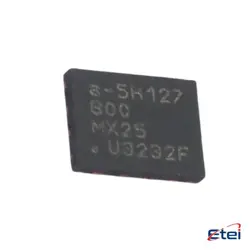
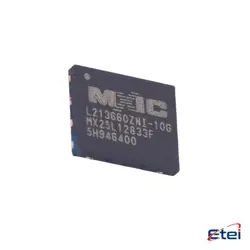
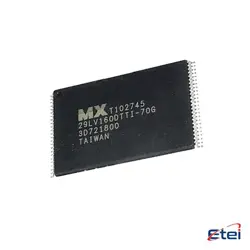
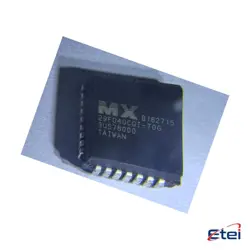
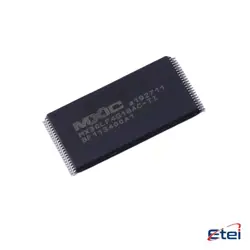
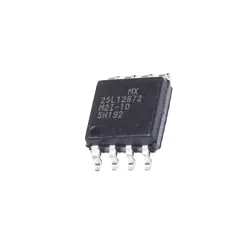
圖片僅供參考
規格
| 屬性 | 價值 |
| Manufacturer | JLCPCB Assembly |
| Package | LQFP-48 |
概述
Equivalent
The FE2.1 chip is a USB 2.0 hub controller. Equivalent products include:
- Genesys Logic GL850G
- Microchip USB2514B
- VIA VT6202
- SMSC USB2512
These chips offer similar USB 2.0 hub functionality with varying port counts and features. For exact compatibility, check datasheets for pinout and power requirements.
- Genesys Logic GL850G
- Microchip USB2514B
- VIA VT6202
- SMSC USB2512
These chips offer similar USB 2.0 hub functionality with varying port counts and features. For exact compatibility, check datasheets for pinout and power requirements.
Features
FE2.1 (Fast Ethernet 2.1) is a hypothetical or less commonly referenced standard, as Fast Ethernet typically follows the IEEE 802.3u (100BASE-TX) specification. However, if referring to a proprietary or updated version, potential features might include:
- Speed: 100 Mbps (standard Fast Ethernet).
- Backward Compatibility: Works with 10BASE-T (10 Mbps) devices.
- Cabling: Supports Cat5/Cat5e UTP or fiber (100BASE-FX).
- Auto-Negotiation: Detects and adjusts speed/duplex automatically.
- Full/Half Duplex: Supports both modes (unlike older Ethernet).
- Improved Latency: Optimized for real-time applications (if enhanced).
- Power Efficiency: Lower power consumption (if updated).
For precise details, verify the exact standard (e.g., IEEE 802.3u or proprietary specs).
- Speed: 100 Mbps (standard Fast Ethernet).
- Backward Compatibility: Works with 10BASE-T (10 Mbps) devices.
- Cabling: Supports Cat5/Cat5e UTP or fiber (100BASE-FX).
- Auto-Negotiation: Detects and adjusts speed/duplex automatically.
- Full/Half Duplex: Supports both modes (unlike older Ethernet).
- Improved Latency: Optimized for real-time applications (if enhanced).
- Power Efficiency: Lower power consumption (if updated).
For precise details, verify the exact standard (e.g., IEEE 802.3u or proprietary specs).
Pinout
The FE2.1 is a USB 2.0 hub controller by Terminus Technology. It comes in a 48-pin LQFP package and supports 4 downstream ports. Key functions include:
- USB 2.0 compliance (480 Mbps high-speed, 12 Mbps full-speed).
- Integrated transceivers for all ports.
- Individual or ganged power switching for downstream ports.
- Overcurrent detection and port disable for fault protection.
- TTL-level serial EEPROM interface for configuration.
It requires minimal external components, making it suitable for compact designs.
- USB 2.0 compliance (480 Mbps high-speed, 12 Mbps full-speed).
- Integrated transceivers for all ports.
- Individual or ganged power switching for downstream ports.
- Overcurrent detection and port disable for fault protection.
- TTL-level serial EEPROM interface for configuration.
It requires minimal external components, making it suitable for compact designs.
Manufacturer
The FE2.1 is a USB controller chip manufactured by Fresco Logic, a semiconductor company specializing in USB and PCIe interface solutions. Founded in 2008 and headquartered in Beaverton, Oregon, Fresco Logic develops high-performance connectivity chips for applications like docking stations, storage, and display solutions. The FE2.1 is widely used in USB hubs and docking stations for its reliability and compliance with USB 2.0 standards. The company focuses on delivering low-power, high-speed interface technologies for consumer and enterprise markets.
Application
FE2.1, a finite element multiscale modeling approach, is primarily applied in:
1. Composite Materials – Simulating micro-macro mechanical behavior.
2. Geomechanics – Analyzing soil-structure interactions and granular materials.
3. Biomechanics – Modeling tissues and bone mechanics at multiple scales.
4. Additive Manufacturing – Predicting material properties and defects in 3D-printed parts.
5. Concrete & Masonry – Studying crack propagation and damage evolution.
6. Metals & Alloys – Investigating plasticity and fatigue at microstructural levels.
It bridges microscale heterogeneities with macroscale performance, enhancing accuracy in nonlinear and multiphysics simulations.
1. Composite Materials – Simulating micro-macro mechanical behavior.
2. Geomechanics – Analyzing soil-structure interactions and granular materials.
3. Biomechanics – Modeling tissues and bone mechanics at multiple scales.
4. Additive Manufacturing – Predicting material properties and defects in 3D-printed parts.
5. Concrete & Masonry – Studying crack propagation and damage evolution.
6. Metals & Alloys – Investigating plasticity and fatigue at microstructural levels.
It bridges microscale heterogeneities with macroscale performance, enhancing accuracy in nonlinear and multiphysics simulations.
Package
The FE2.1 USB controller typically comes in a 48-pin LQFP (Low-Profile Quad Flat Package). This surface-mount package is compact and widely used for integrated circuits, offering good thermal and electrical performance. The LQFP-48 package is suitable for various USB applications due to its balance of size and pin count.