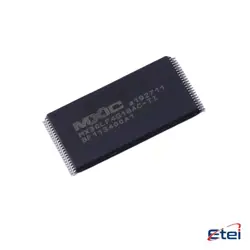
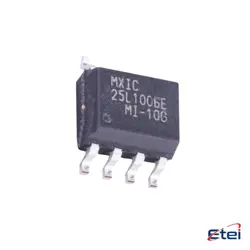
圖片僅供參考
規格
| 屬性 | 價值 |
| Manufacturer | SPTECH |
| Package / Case | TO-220F |
概述
Description
The 2SA1930 is a PNP bipolar junction transistor (BJT) designed for high-voltage, high-speed switching and amplification in electronic circuits. Key features include:
- Voltage Rating: Up to 180V (VCEO).
- Current Capacity: 1.5A (IC) continuous collector current.
- Power Dissipation: 20W (PC) with proper heat dissipation.
- Gain (hFE): Typically 60–320, ensuring good signal amplification.
- Fast Switching Speed: Suitable for audio amplifiers, power regulators, and motor control.
Commonly used in audio output stages, power supplies, and industrial applications, the 2SA1930 is often paired with complementary NPN transistors (e.g., 2SC5171). Proper heat sinking is recommended for high-power operation.
For exact specifications, refer to the datasheet from manufacturers like Toshiba or Renesas.
- Voltage Rating: Up to 180V (VCEO).
- Current Capacity: 1.5A (IC) continuous collector current.
- Power Dissipation: 20W (PC) with proper heat dissipation.
- Gain (hFE): Typically 60–320, ensuring good signal amplification.
- Fast Switching Speed: Suitable for audio amplifiers, power regulators, and motor control.
Commonly used in audio output stages, power supplies, and industrial applications, the 2SA1930 is often paired with complementary NPN transistors (e.g., 2SC5171). Proper heat sinking is recommended for high-power operation.
For exact specifications, refer to the datasheet from manufacturers like Toshiba or Renesas.
Equivalent
The 2SA1930 is a PNP transistor. Equivalent replacements include:
- 2SA1930Q (higher current rating)
- 2SA1930T (higher voltage rating)
- 2SA1930R (lower saturation voltage)
- 2SA1930S (enhanced power dissipation)
Check datasheets for exact specs before substitution.
- 2SA1930Q (higher current rating)
- 2SA1930T (higher voltage rating)
- 2SA1930R (lower saturation voltage)
- 2SA1930S (enhanced power dissipation)
Check datasheets for exact specs before substitution.
Manufacturer
The 2SA1930 is a PNP bipolar junction transistor (BJT) manufactured by Toshiba, a well-known Japanese multinational conglomerate specializing in electronics and semiconductors.
Toshiba is a reputable company with a long history in producing high-quality electronic components, including transistors, ICs, and power devices. The 2SA1930 is commonly used in audio amplification and power regulation circuits.
Toshiba's semiconductor division was later spun off into Kioxia (for memory products) and Toshiba Electronic Devices & Storage Corporation (for discrete semiconductors), but the 2SA1930 remains associated with Toshiba's legacy branding.
Toshiba is a reputable company with a long history in producing high-quality electronic components, including transistors, ICs, and power devices. The 2SA1930 is commonly used in audio amplification and power regulation circuits.
Toshiba's semiconductor division was later spun off into Kioxia (for memory products) and Toshiba Electronic Devices & Storage Corporation (for discrete semiconductors), but the 2SA1930 remains associated with Toshiba's legacy branding.
Application
The 2SA1930 is a PNP bipolar junction transistor (BJT) commonly used in:
1. Audio Amplifiers – As a driver or output stage in audio circuits.
2. Power Regulation – In voltage regulators and power supply circuits.
3. Switching Circuits – For moderate-speed switching applications.
4. Motor Control – In small motor drivers and control systems.
5. General-Purpose Amplification – In signal amplification and buffering.
Its high current (1.5A) and voltage (180V) ratings make it suitable for medium-power applications.
1. Audio Amplifiers – As a driver or output stage in audio circuits.
2. Power Regulation – In voltage regulators and power supply circuits.
3. Switching Circuits – For moderate-speed switching applications.
4. Motor Control – In small motor drivers and control systems.
5. General-Purpose Amplification – In signal amplification and buffering.
Its high current (1.5A) and voltage (180V) ratings make it suitable for medium-power applications.