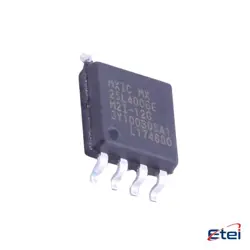
規格
| 屬性 | 價值 |
| Package / Case | Tape & Reel (TR),Cut Tape (CT),Bulk |
| Series | Automotive, AEC-Q100 |
| Part Status | Active |
| Type | General Purpose |
| Number of Elements | 1 |
| Output Type | CMOS, Push-Pull, Rail-to-Rail, TTL |
| Voltage - Supply, Single/Dual (±) | 2.7V ~ 5.5V, ±1.35V ~ 2.75V |
| Voltage - Input Offset (Max) | 6.5mV @ 5.5V |
| Current - Input Bias(Max) | 10pA @ 5.5V |
| Current - Quiescent (Max) | 5mA |
| CMRRPSRR(Typ) | 70dB CMRR, 100dB PSRR |
| Propagation Delay(Max) | 10ns |
| Hysteresis | 6mV |
| Operating Temperature | -40°C ~ 125°C |
| Mounting Type | Surface Mount |
概述
Description
The TLV3501AQDBVRQ1 is a high-speed comparator from Texas Instruments designed for precision applications. It features a rail-to-rail input stage and an output that can swing from rail to rail, making it suitable for low-voltage and low-power applications. This component is known for its fast response time, with a typical propagation delay of just a few nanoseconds, which makes it ideal for high-frequency signal detection and processing.
The device operates within a wide voltage range and is automotive-qualified, meeting the AEC-Q100 standards, ensuring its reliability in harsh environments often encountered in automotive applications. The TLV3501AQDBVRQ1 comes in a small SOT-23 package, which makes it suitable for compact circuit designs.
Key applications include zero-crossing detectors, high-speed sampling circuits, and threshold detectors. Its robust design and consistent performance are valuable in any scenario requiring precise and rapid signal comparison. The combination of speed, reliability, and versatility makes it a popular choice for engineers working on cutting-edge electronic designs.
The device operates within a wide voltage range and is automotive-qualified, meeting the AEC-Q100 standards, ensuring its reliability in harsh environments often encountered in automotive applications. The TLV3501AQDBVRQ1 comes in a small SOT-23 package, which makes it suitable for compact circuit designs.
Key applications include zero-crossing detectors, high-speed sampling circuits, and threshold detectors. Its robust design and consistent performance are valuable in any scenario requiring precise and rapid signal comparison. The combination of speed, reliability, and versatility makes it a popular choice for engineers working on cutting-edge electronic designs.
Equivalent
The TLV3501AQDBVRQ1 is a high-speed comparator from Texas Instruments. Equivalent products from other manufacturers include the LMV7219 from ON Semiconductor, the MAX9117 from Maxim Integrated, and the LTC6752 from Analog Devices. It's important to compare specific features like supply voltage range, speed, and packaging to ensure full compatibility, as exact equivalents may vary slightly in these parameters.
Features
The TLV3501AQDBVRQ1 is a high-speed comparator from Texas Instruments, designed for automotive applications. It features a low propagation delay of 4.5 ns, making it suitable for high-speed applications that require fast response times. The device operates over a wide supply voltage range from 2.7 V to 5.5 V, providing flexibility for various applications. It is characterized by its rail-to-rail input, which allows the input common-mode range to include both supply rails, facilitating ease of design.
The comparator supports a push-pull output stage, which helps achieve rapid rise and fall times, essential for high-speed signal processing. It is also equipped with an ESD protection mechanism, ensuring robustness against electrostatic discharge. The device is automotive qualified, meeting the AEC-Q100 standard, ensuring reliability and performance in automotive environments. It comes in a small SOT-23 package, which is beneficial for space-constrained designs. The TLV3501AQDBVRQ1 is ideal for applications such as zero-crossing detectors, voltage level detection, and fast pulse-width modulation circuits.
The comparator supports a push-pull output stage, which helps achieve rapid rise and fall times, essential for high-speed signal processing. It is also equipped with an ESD protection mechanism, ensuring robustness against electrostatic discharge. The device is automotive qualified, meeting the AEC-Q100 standard, ensuring reliability and performance in automotive environments. It comes in a small SOT-23 package, which is beneficial for space-constrained designs. The TLV3501AQDBVRQ1 is ideal for applications such as zero-crossing detectors, voltage level detection, and fast pulse-width modulation circuits.
Pinout
The TLV3501AQDBVRQ1 is a high-speed comparator from Texas Instruments. It comes in an 8-pin SOT-23 package. The primary function of this comparator is to compare two voltage levels and output a digital signal indicating which input is higher. It features a fast response time, making it suitable for applications requiring high-speed signal processing.
Here's a brief overview of the pin functions:
1. V+: Positive supply voltage.
2. GND: Ground connection.
3. IN+: Non-inverting input.
4. IN-: Inverting input.
5. OUT: Comparator output.
6. NC: No connection (not internally connected).
7. - (other pins depending on specific package variant): May include other functions like shutdown or enable in some variants.
For precise pin assignments and details, refer to the specific datasheet for the TLV3501AQDBVRQ1, as the exact pin configuration can vary slightly depending on the package and specific model variant.
Here's a brief overview of the pin functions:
1. V+: Positive supply voltage.
2. GND: Ground connection.
3. IN+: Non-inverting input.
4. IN-: Inverting input.
5. OUT: Comparator output.
6. NC: No connection (not internally connected).
7. - (other pins depending on specific package variant): May include other functions like shutdown or enable in some variants.
For precise pin assignments and details, refer to the specific datasheet for the TLV3501AQDBVRQ1, as the exact pin configuration can vary slightly depending on the package and specific model variant.
Manufacturer
The TLV3501AQDBVRQ1 is manufactured by Texas Instruments. Texas Instruments (TI) is a global semiconductor company that designs and produces a broad range of integrated circuits and electronic components. Founded in 1930 and headquartered in Dallas, Texas, TI is known for its innovations in analog and digital embedded processing. The company serves various sectors, including automotive, industrial, personal electronics, communications equipment, and enterprise systems. TI is recognized for its contributions to advancements in technology and is a leader in the semiconductor industry.
Application
The TLV3501AQDBVRQ1 is a high-speed comparator from Texas Instruments, designed for applications requiring fast response times. Key application areas include:
1. High-speed Signal Detection: Useful in systems requiring rapid comparison of analog signals.
2. Communication Systems: Enhances performance in data communication and signal processing.
3. High-frequency Oscillators: Aids in generating precise timing signals.
4. Data Acquisition Systems: Improves accuracy and speed in converting analog signals to digital.
5. Test and Measurement Equipment: Enhances the performance and reliability of measurement devices.
6. Automotive Applications: Suitable for use in vehicle electronic systems, given its qualification for automotive standards.
1. High-speed Signal Detection: Useful in systems requiring rapid comparison of analog signals.
2. Communication Systems: Enhances performance in data communication and signal processing.
3. High-frequency Oscillators: Aids in generating precise timing signals.
4. Data Acquisition Systems: Improves accuracy and speed in converting analog signals to digital.
5. Test and Measurement Equipment: Enhances the performance and reliability of measurement devices.
6. Automotive Applications: Suitable for use in vehicle electronic systems, given its qualification for automotive standards.
Package
The TLV3501AQDBVRQ1 is housed in a SOT-23-6 package, which is a small outline transistor package with 6 pins. This package is commonly used for its compact size, making it suitable for space-constrained applications.