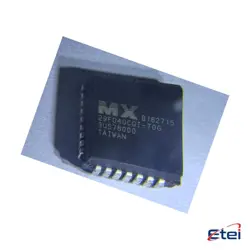
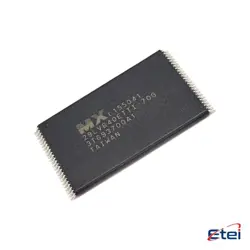
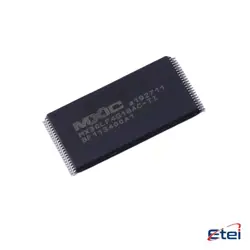
圖片僅供參考
SN74LVC244APW
+物料清單IC BUF NON-INVERT 3.6V 20TSSOP
-
製造商德州儀器
-
製造商部分 #SN74LVC244APW
-
有存貨3824
365 天品質保證
7*24 小時服務保證
90-日售後保障
正品保證
規格
| 屬性 | 價值 |
| Package | Bulk,Tube |
| Series | 74LVC |
| ProductStatus | Active |
| LogicType | Buffer, Non-Inverting |
| NumberofElements | 2 |
| NumberofBitsperElement | 4 |
| OutputType | 3-State |
| Current-OutputHighLow | 24mA, 24mA |
| Voltage-Supply | 1.65V ~ 3.6V |
| OperatingTemperature | -40°C ~ 125°C (TA) |
| MountingType | Surface Mount |
| Package/Case | 20-TSSOP (0.173, 4.40mm Width) |
概述
Description
The SN74LVC244APW is an octal buffer/driver with 3-state outputs, part of the Texas Instruments LVC family designed for low-voltage operation. It is primarily used in applications requiring signal buffering and data transmission between systems operating at different voltage levels. The device features eight independent buffers, each with its own output enable, allowing for flexible data management.
Key features include:
- Operates from a supply voltage range of 1.65 V to 3.6 V.
- 5-V tolerant inputs, enabling integration with higher voltage systems without additional protection circuitry.
- High output drive capability, suitable for driving large loads.
- Low power consumption, with a quiescent current typically in microampere range.
- Fast switching speeds, with propagation delays typically in the nanoseconds, making it suitable for high-speed applications.
The SN74LVC244APW is commonly housed in a TSSOP (Thin Shrink Small Outline Package) for space-efficient designs. Its reliable performance and broad compatibility make it a staple in digital circuits, used in various applications including computing, telecommunications, and consumer electronics.
Key features include:
- Operates from a supply voltage range of 1.65 V to 3.6 V.
- 5-V tolerant inputs, enabling integration with higher voltage systems without additional protection circuitry.
- High output drive capability, suitable for driving large loads.
- Low power consumption, with a quiescent current typically in microampere range.
- Fast switching speeds, with propagation delays typically in the nanoseconds, making it suitable for high-speed applications.
The SN74LVC244APW is commonly housed in a TSSOP (Thin Shrink Small Outline Package) for space-efficient designs. Its reliable performance and broad compatibility make it a staple in digital circuits, used in various applications including computing, telecommunications, and consumer electronics.
Equivalent
The SN74LVC244APW is a 3.3V octal buffer/driver with 3-state outputs. Equivalent products include:
1. NXP 74LVC244A
2. ON Semiconductor MC74LCX244
3. Microchip Technology 74LVCH244A
4. Fairchild Semiconductor 74VHC244
These alternatives typically offer similar functionality and pin compatibility, though specifics may vary slightly based on manufacturer and exact product series. Always consult datasheets for precise electrical characteristics and compatibility.
1. NXP 74LVC244A
2. ON Semiconductor MC74LCX244
3. Microchip Technology 74LVCH244A
4. Fairchild Semiconductor 74VHC244
These alternatives typically offer similar functionality and pin compatibility, though specifics may vary slightly based on manufacturer and exact product series. Always consult datasheets for precise electrical characteristics and compatibility.
Features
The SN74LVC244APW is an octal buffer/driver with 3-state outputs. Key features include:
1. Supply Voltage Range: Operates with a wide voltage range from 1.65V to 3.6V, making it suitable for various applications.
2. High-Speed Operation: Offers high-speed signal processing with low power dissipation, suitable for performance-critical applications.
3. 3-State Outputs: Equipped with 3-state outputs, allowing the device to interface with bus lines or serve as a logic circuitry buffer.
4. Low Power Consumption: Supports low power consumption due to its CMOS technology, which is beneficial for battery-operated devices.
5. High Drive Capability: Provides high drive capability, capable of driving large capacitive loads.
6. Wide Temperature Range: Operates within a wide temperature range, typically from -40°C to 85°C, suitable for industrial environments.
7. Latch-Up Performance: Exhibits high immunity to latch-up, enhancing its reliability in various applications.
8. Package Type: Available in the TSSOP (Thin Shrink Small Outline Package), which is compact for space-constrained designs.
These features make the SN74LVC244APW versatile for buffering and driving applications in digital circuits.
1. Supply Voltage Range: Operates with a wide voltage range from 1.65V to 3.6V, making it suitable for various applications.
2. High-Speed Operation: Offers high-speed signal processing with low power dissipation, suitable for performance-critical applications.
3. 3-State Outputs: Equipped with 3-state outputs, allowing the device to interface with bus lines or serve as a logic circuitry buffer.
4. Low Power Consumption: Supports low power consumption due to its CMOS technology, which is beneficial for battery-operated devices.
5. High Drive Capability: Provides high drive capability, capable of driving large capacitive loads.
6. Wide Temperature Range: Operates within a wide temperature range, typically from -40°C to 85°C, suitable for industrial environments.
7. Latch-Up Performance: Exhibits high immunity to latch-up, enhancing its reliability in various applications.
8. Package Type: Available in the TSSOP (Thin Shrink Small Outline Package), which is compact for space-constrained designs.
These features make the SN74LVC244APW versatile for buffering and driving applications in digital circuits.
Pinout
The SN74LVC244APW is an octal buffer/line driver with 3-state outputs, featuring a total of 20 pins. It is designed to provide high-speed and low-power operation in digital applications. The device is arranged in two groups, each containing four line drivers. Each group has its own output enable pin, allowing for individual control of the output states.
The main functions of the SN74LVC244APW are:
1. Buffering/Driving: It buffers signals and drives data from the input to the output, providing the ability to drive larger loads.
2. 3-State Outputs: When the output enable is deactivated, the outputs go into a high-impedance state, allowing for bus-sharing or isolation of the outputs from the rest of the circuit.
3. Direction Control: The device does not have direction control pins like some transceivers, as it is used for unidirectional data flow from inputs to outputs.
These features make the SN74LVC244APW suitable for use in memory address driving, data bus interfacing, and other applications requiring buffering and isolation of digital signals.
The main functions of the SN74LVC244APW are:
1. Buffering/Driving: It buffers signals and drives data from the input to the output, providing the ability to drive larger loads.
2. 3-State Outputs: When the output enable is deactivated, the outputs go into a high-impedance state, allowing for bus-sharing or isolation of the outputs from the rest of the circuit.
3. Direction Control: The device does not have direction control pins like some transceivers, as it is used for unidirectional data flow from inputs to outputs.
These features make the SN74LVC244APW suitable for use in memory address driving, data bus interfacing, and other applications requiring buffering and isolation of digital signals.
Manufacturer
The SN74LVC244APW is manufactured by Texas Instruments (TI). Texas Instruments is a multinational technology company based in the United States, known for designing and manufacturing semiconductors and various integrated circuits. TI's products are widely used in electronics, including industrial, automotive, personal electronics, communications equipment, and enterprise systems. The company has a strong focus on innovation and leads in the analog technology sector, contributing significantly to advancements in electronics and technology solutions.
Application
The SN74LVC244APW is a non-inverting octal buffer/driver with 3-state outputs, commonly used in digital circuits. Its applications include:
1. Bus Driving: Acts as an interface between different sections of a digital system, providing drive capability to bus lines.
2. Signal Isolation: Isolates different parts of a circuit to prevent noise and signal degradation.
3. Voltage Level Shifting: Translates signal levels between different logic families or voltage domains.
4. Data Multiplexing/Demultiplexing: Routes data to and from multiple sources or destinations.
5. LED Driving: Provides current to drive LED displays.
6. Memory Address Driving: Assists in memory expansion and access by driving address buses.
These functions are critical in microcontrollers, memory modules, and communication devices.
1. Bus Driving: Acts as an interface between different sections of a digital system, providing drive capability to bus lines.
2. Signal Isolation: Isolates different parts of a circuit to prevent noise and signal degradation.
3. Voltage Level Shifting: Translates signal levels between different logic families or voltage domains.
4. Data Multiplexing/Demultiplexing: Routes data to and from multiple sources or destinations.
5. LED Driving: Provides current to drive LED displays.
6. Memory Address Driving: Assists in memory expansion and access by driving address buses.
These functions are critical in microcontrollers, memory modules, and communication devices.
Package
The SN74LVC244APW is a buffer/driver IC from Texas Instruments. It comes in a TSSOP (Thin Shrink Small Outline Package) with 20 pins, denoted by the "PW" in its part number.