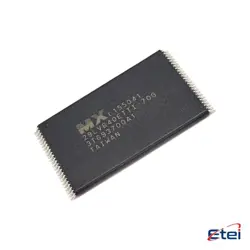
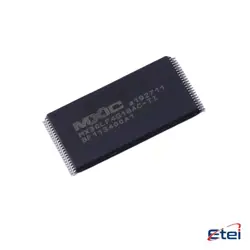
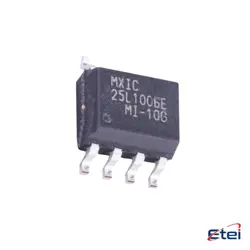
圖片僅供參考
規格
| 屬性 | 價值 |
| Supplier | Eaton - Bussmann Electrical Division |
| Package / Case | Bulk |
| Part Status | Obsolete |
概述
Description
"Introduction to SA-2" likely refers to a topic or module within a specific context, such as a course or a subject area. Without additional context, it's challenging to provide a precise answer, but here's a general overview:
SA-2 might stand for "Summative Assessment 2," commonly used in educational settings to denote the second major evaluation period within an academic year. Summative assessments evaluate student learning, skill acquisition, and academic achievement at the end of an instructional period. They are typically high stakes, including exams, projects, or standardized tests, designed to gauge students' comprehension of the material covered.
In this context, "Introduction to SA-2" would entail familiarizing students with the structure, content, and expectations of the upcoming assessment. It might include guidance on study strategies, clarification of key topics, and an overview of the format and criteria used for evaluation. The goal is to equip students with the necessary information to effectively prepare and succeed in their assessments.
SA-2 might stand for "Summative Assessment 2," commonly used in educational settings to denote the second major evaluation period within an academic year. Summative assessments evaluate student learning, skill acquisition, and academic achievement at the end of an instructional period. They are typically high stakes, including exams, projects, or standardized tests, designed to gauge students' comprehension of the material covered.
In this context, "Introduction to SA-2" would entail familiarizing students with the structure, content, and expectations of the upcoming assessment. It might include guidance on study strategies, clarification of key topics, and an overview of the format and criteria used for evaluation. The goal is to equip students with the necessary information to effectively prepare and succeed in their assessments.
Equivalent
The SA-2 chip, typically used in embedded systems and low-power applications, might have equivalents such as microcontrollers or processors from other manufacturers. Possible alternatives include chips from the ARM Cortex-M series, which are widely used in similar applications. Additionally, microcontrollers from manufacturers like Microchip's PIC series or Atmel's AVR series could serve as equivalents, depending on specific requirements like processing power, power consumption, and peripheral support. Always compare specifications to ensure compatibility with your application.
Features
The SA-2, also known as Surface-to-Air Missile System 2 (Guideline), is a Soviet-era missile system designed for targeting aircraft. Key features include:
1. Missile Design: The SA-2 uses a two-stage rocket booster for propulsion, providing the capability to reach high altitudes and distances.
2. Guidance System: It employs radio command guidance during launch and early stages, switching to semi-active radar homing for terminal phase targeting.
3. Range and Altitude: The missile can engage targets at medium to high altitudes, with a range typically around 30 to 50 kilometers.
4. Radar System: The system includes the "Fan Song" radar for target acquisition and tracking.
5. Mobility and Deployment: Mounted on fixed or semi-mobile launchers, making it suitable for strategic deployment but less versatile compared to fully mobile systems.
6. Warhead: Equipped with a high-explosive fragmentation warhead designed to detonate in proximity to the target.
7. Operational History: Widely used during the Cold War, notably in conflicts like the Vietnam War and various Middle Eastern engagements.
These features contribute to the SA-2's reputation as a formidable, if somewhat dated, anti-aircraft system.
1. Missile Design: The SA-2 uses a two-stage rocket booster for propulsion, providing the capability to reach high altitudes and distances.
2. Guidance System: It employs radio command guidance during launch and early stages, switching to semi-active radar homing for terminal phase targeting.
3. Range and Altitude: The missile can engage targets at medium to high altitudes, with a range typically around 30 to 50 kilometers.
4. Radar System: The system includes the "Fan Song" radar for target acquisition and tracking.
5. Mobility and Deployment: Mounted on fixed or semi-mobile launchers, making it suitable for strategic deployment but less versatile compared to fully mobile systems.
6. Warhead: Equipped with a high-explosive fragmentation warhead designed to detonate in proximity to the target.
7. Operational History: Widely used during the Cold War, notably in conflicts like the Vietnam War and various Middle Eastern engagements.
These features contribute to the SA-2's reputation as a formidable, if somewhat dated, anti-aircraft system.
Pinout
The SA-2, also known as the surface-to-air missile system, S-75 Dvina, does not have a pin count in the same sense as an integrated circuit or electrical connector. Instead, it is a missile system developed by the Soviet Union for targeting aircraft. It includes several components such as the missile itself, launchers, and radar systems.
The SA-2 system's primary function is to intercept and destroy incoming aircraft or other aerial targets. It uses a command guidance system with radar for target acquisition, tracking, and guidance to the missile. The system is comprised of various components including a Fan Song radar, which is used for guidance, and a launcher vehicle. Each missile is equipped with a warhead and a propulsion system designed to reach high altitudes and speeds to effectively engage its targets.
For specific technical specifications or components, one would need to refer to detailed military documentation or technical manuals, as the SA-2 is a complex system rather than a single electronic component with a defined pin count.
The SA-2 system's primary function is to intercept and destroy incoming aircraft or other aerial targets. It uses a command guidance system with radar for target acquisition, tracking, and guidance to the missile. The system is comprised of various components including a Fan Song radar, which is used for guidance, and a launcher vehicle. Each missile is equipped with a warhead and a propulsion system designed to reach high altitudes and speeds to effectively engage its targets.
For specific technical specifications or components, one would need to refer to detailed military documentation or technical manuals, as the SA-2 is a complex system rather than a single electronic component with a defined pin count.
Manufacturer
The SA-2, also known as the S-75 Dvina, is a surface-to-air missile system originally developed by the Soviet Union. The manufacturer of this missile system is the Soviet company Almaz-Antey, known during the Soviet era as the design bureau OKB-2, which later became the NPO Almaz. Almaz-Antey is a state-owned enterprise in Russia that specializes in the development and production of air defense systems and technologies.
The company is heavily involved in the aerospace and defense industry, focusing primarily on creating advanced air and missile defense systems. Almaz-Antey's products are designed to protect against a variety of aerial threats, including aircraft, ballistic missiles, and other types of aerial vehicles. The company is one of the largest defense contractors in Russia and plays a significant role in the country's defense capabilities, with a reputation for producing a range of sophisticated air defense systems used both domestically and internationally.
The company is heavily involved in the aerospace and defense industry, focusing primarily on creating advanced air and missile defense systems. Almaz-Antey's products are designed to protect against a variety of aerial threats, including aircraft, ballistic missiles, and other types of aerial vehicles. The company is one of the largest defense contractors in Russia and plays a significant role in the country's defense capabilities, with a reputation for producing a range of sophisticated air defense systems used both domestically and internationally.
Application
SA-2, or Surface-to-Air missile systems, are primarily employed in military and defense applications to provide air defense against hostile aircraft and missiles. These systems are used to protect strategic assets, military bases, and critical infrastructure from aerial threats. Additionally, they are vital in securing airspace during conflicts, deterring enemy air operations, and providing ground forces with protection against aerial attacks. SA-2 systems can also be part of integrated air defense networks, enhancing a country's overall defense capability. Their deployment can be strategic in geopolitical settings to maintain air superiority and safeguard national security.
Package
SA-2 typically refers to a type of surface-to-air missile system, specifically the Soviet-designed S-75 Dvina, known as the SA-2 Guideline by NATO. Its package type includes the missile, launcher, radar guidance systems, and support vehicles. It's designed for medium to high-altitude air defense and was widely exported and used globally.