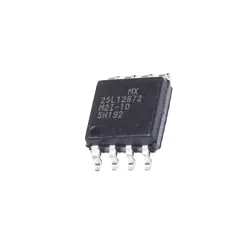
圖片僅供參考
S25FL256SAGMFIG01
+物料清單IC FLASH 256MBIT SPI/QUAD 16SOIC
-
製造商英飛淩科技
-
製造商部分 #S25FL256SAGMFIG01
-
有存貨9489
365 天品質保證
7*24 小時服務保證
90-日售後保障
正品保證
規格
| 屬性 | 價值 |
| Series | FL-S |
| Part Status | Active |
| Digi Key Programmable | Not Verified |
| Memory Type | Non-Volatile |
| Memory Format | FLASH |
| Technology | FLASH - NOR |
| Memory Size | 256Mbit |
| Memory Organization | 32M x 8 |
| Memory Interface | SPI - Quad I/O |
| Voltage - Supply | 2.7V ~ 3.6V |
| Operating Temperature | -40°C ~ 85°C (TA) |
| Mounting Type | Surface Mount |
| Package / Case | 16-SOIC (0.295", 7.50mm Width) |
| Supplier Device Package | 16-SOIC |
| Base Product Number | S25FL256 |
| Clock Frequency | 133 MHz |
概述
Description
The S25FL256SAGMFIG01 is a high-performance, 256-megabit (32 megabytes), serial NOR Flash memory chip designed by Cypress Semiconductor (now part of Infineon Technologies). This memory device employs a SPI (Serial Peripheral Interface) protocol, allowing efficient data transfer and communication with microcontrollers and other digital devices.
Key features of the S25FL256SAGMFIG01 include fast read and write speeds, low power consumption, and a wide operating temperature range, making it suitable for various applications such as embedded systems, consumer electronics, and industrial devices. It supports a dual/quad I/O interface to enhance data throughput and offers advanced security features like hardware-based write protection and password protection to safeguard data integrity.
The device is organized in a uniform 256 KB sector architecture, simplifying software design and memory management. It also provides reliable data retention and endurance characteristics, ensuring longevity and durability in different environments. Overall, the S25FL256SAGMFIG01 is valued for its reliability, flexibility, and performance in space-constrained applications.
Key features of the S25FL256SAGMFIG01 include fast read and write speeds, low power consumption, and a wide operating temperature range, making it suitable for various applications such as embedded systems, consumer electronics, and industrial devices. It supports a dual/quad I/O interface to enhance data throughput and offers advanced security features like hardware-based write protection and password protection to safeguard data integrity.
The device is organized in a uniform 256 KB sector architecture, simplifying software design and memory management. It also provides reliable data retention and endurance characteristics, ensuring longevity and durability in different environments. Overall, the S25FL256SAGMFIG01 is valued for its reliability, flexibility, and performance in space-constrained applications.
Equivalent
The S25FL256SAGMFIG01 is a 256 Mbit (32 MB) Serial NOR Flash memory chip manufactured by Cypress Semiconductor, now part of Infineon Technologies. Equivalent products include:
1. Micron MT25QL256ABA
2. Winbond W25Q256JV
3. Macronix MX25L25645G
While these chips generally offer similar storage capacity and interface options (SPI), always verify specific requirements such as voltage, temperature range, and package type for full compatibility.
1. Micron MT25QL256ABA
2. Winbond W25Q256JV
3. Macronix MX25L25645G
While these chips generally offer similar storage capacity and interface options (SPI), always verify specific requirements such as voltage, temperature range, and package type for full compatibility.
Features
The S25FL256SAGMFIG01 is a 256-Mbit (32 MB) SPI NOR Flash memory device from Cypress Semiconductor, designed for a range of high-performance applications. Key features include:
1. Density: 256 Megabits (32 Megabytes).
2. Interface: Supports Serial Peripheral Interface (SPI) with modes that include Single, Dual, and Quad I/O operations for flexibility and performance.
3. Speed: Offers fast read performance with a maximum clock frequency of up to 133 MHz in quad I/O mode.
4. Architecture: Organized in a 64-kB or 256-kB sector architecture, providing efficient erase and write operations.
5. Security: Includes unique device serial number and factory-programmed 256-bit OTP (one-time programmable) memory.
6. Endurance: Supports up to 100,000 program/erase cycles per sector.
7. Retention: Data retention of 20 years, ensuring reliability.
8. Voltage Range: Operates over a wide voltage range of 2.7V to 3.6V.
9. Package Options: Available in several package types, including small-form-factor packages suitable for space-constrained applications.
These features make it suitable for use in a variety of high-reliability and performance-demanding applications like consumer electronics, industrial systems, and automotive solutions.
1. Density: 256 Megabits (32 Megabytes).
2. Interface: Supports Serial Peripheral Interface (SPI) with modes that include Single, Dual, and Quad I/O operations for flexibility and performance.
3. Speed: Offers fast read performance with a maximum clock frequency of up to 133 MHz in quad I/O mode.
4. Architecture: Organized in a 64-kB or 256-kB sector architecture, providing efficient erase and write operations.
5. Security: Includes unique device serial number and factory-programmed 256-bit OTP (one-time programmable) memory.
6. Endurance: Supports up to 100,000 program/erase cycles per sector.
7. Retention: Data retention of 20 years, ensuring reliability.
8. Voltage Range: Operates over a wide voltage range of 2.7V to 3.6V.
9. Package Options: Available in several package types, including small-form-factor packages suitable for space-constrained applications.
These features make it suitable for use in a variety of high-reliability and performance-demanding applications like consumer electronics, industrial systems, and automotive solutions.
Pinout
The S25FL256SAGMFIG01 is a 256 Mbit (32 MB) Serial NOR Flash memory chip by Cypress Semiconductor (now part of Infineon Technologies). It typically comes in a 16-pin package. Here is a brief overview of its pin functions:
1. CS# (Chip Select): Activates the device when low.
2. SCK (Serial Clock): Synchronizes data movement on the bus.
3. SI/IO0 (Serial Input/Output): Data input/output.
4. SO/IO1 (Serial Output/Input): Data output/input.
5. WP#/IO2 (Write Protect/IO): Write protection or data I/O.
6. HOLD#/IO3 (Hold/IO): Pauses serial communication or data I/O.
7. VCC: Power supply.
8. GND: Ground.
The remaining pins are usually NC (No Connect), DNU (Do Not Use), or reserved for other functions based on specific configurations or package types. This memory device supports high-performance read operations, write operations, and advanced protection features.
1. CS# (Chip Select): Activates the device when low.
2. SCK (Serial Clock): Synchronizes data movement on the bus.
3. SI/IO0 (Serial Input/Output): Data input/output.
4. SO/IO1 (Serial Output/Input): Data output/input.
5. WP#/IO2 (Write Protect/IO): Write protection or data I/O.
6. HOLD#/IO3 (Hold/IO): Pauses serial communication or data I/O.
7. VCC: Power supply.
8. GND: Ground.
The remaining pins are usually NC (No Connect), DNU (Do Not Use), or reserved for other functions based on specific configurations or package types. This memory device supports high-performance read operations, write operations, and advanced protection features.
Manufacturer
The S25FL256SAGMFIG01 is manufactured by Cypress Semiconductor, which is now part of Infineon Technologies. Cypress Semiconductor was known for its expertise in producing a wide range of semiconductor products, including flash memory, microcontrollers, and wireless connectivity solutions. In 2020, Cypress was acquired by Infineon Technologies, a German company that is one of the largest semiconductor manufacturers in the world. Infineon focuses on various sectors, including automotive, industrial power control, power management, digital security solutions, and IoT applications.
Application
The S25FL256SAGMFIG01 is a 256 Mbit, 3.0V SPI Flash memory. Its application areas include:
1. Embedded Systems: Used for firmware storage in microcontrollers and embedded devices.
2. Consumer Electronics: Employed in devices like TVs, set-top boxes, and gaming consoles for managing firmware and software updates.
3. Automotive: Utilized in infotainment systems, navigation units, and ADAS for data storage and retrieval.
4. Industrial Applications: Used in PLCs and industrial automation equipment for firmware and data logging.
5. Networking Equipment: Applied in routers and switches for storing operating systems and configuration data.
These applications leverage the flash memory’s reliability, endurance, and fast read/write capabilities.
1. Embedded Systems: Used for firmware storage in microcontrollers and embedded devices.
2. Consumer Electronics: Employed in devices like TVs, set-top boxes, and gaming consoles for managing firmware and software updates.
3. Automotive: Utilized in infotainment systems, navigation units, and ADAS for data storage and retrieval.
4. Industrial Applications: Used in PLCs and industrial automation equipment for firmware and data logging.
5. Networking Equipment: Applied in routers and switches for storing operating systems and configuration data.
These applications leverage the flash memory’s reliability, endurance, and fast read/write capabilities.
Package
The S25FL256SAGMFIG01 is a part of the S25FL256S series manufactured by Cypress Semiconductor (now part of Infineon Technologies). It features a Serial NOR Flash memory with a 256 Mbit (32 MByte) storage capacity. The package type for this component is typically an 8-lead SOIC (Small Outline Integrated Circuit) or similar, used for surface mounting on PCBs. Always refer to the manufacturer's datasheet for precise packaging details.