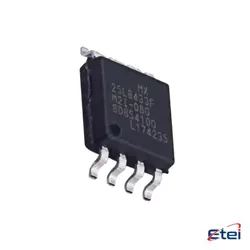
圖片僅供參考
MOC3021M
+物料清單OPTOISOLATOR 5KV TRIAC 1CH 6-DIP
-
製造商利通股份有限公司。
-
製造商部分 #MOC3021M
-
有存貨26344
365 天品質保證
7*24 小時服務保證
90-日售後保障
正品保證
規格
| 屬性 | 價值 |
| Series | MOC302x |
| Part Status | Active |
| Output Type | Triac |
| Zero Crossing Circuit | No |
| Number of Channels | 1 |
| Voltage - Isolation | 5000Vrms |
| Voltage - Off State | 400 V |
| Static d V / dt (Min) | 1kV/µs |
| Current - LED Trigger (Ift) (Max) | 15mA |
| Current - Hold (Ih) | 250µA (Typ) |
| Voltage - Forward (Vf) (Typ) | 1.15V |
| Current - DC Forward (If) (Max) | 50 mA |
| Operating Temperature | -40°C ~ 100°C |
| Mounting Type | Through Hole |
| Package / Case | 6-DIP (0.300", 7.62mm) |
| Supplier Device Package | 6-DIP |
| Approval Agency | CQC, CSA, TUV, UL, VDE |
| Base Product Number | MOC302 |
概述
Description
The MOC3021M is an optoisolator, also known as an optocoupler, which is used to transfer electrical signals between two isolated circuits using light. This device contains a Gallium Arsenide infrared emitting diode that is optically coupled to a silicon bilateral switch. It is commonly used in interfacing different voltage levels or microcontroller outputs to AC loads, ensuring signal integrity and user safety by providing electrical isolation between high and low voltage sections of a circuit.
Key features of the MOC3021M include a high isolation voltage of 5,000 VRMS, a zero-crossing capability that minimizes EMI by turning on the load at the zero voltage point of the AC waveform, and a maximum off-state voltage of 400V. The device is often employed in applications like TRIAC drivers, solid-state relays, lamp dimmers, and motor control systems. Its compact 6-pin DIP package makes it easy to integrate into a wide range of electronic designs.
Key features of the MOC3021M include a high isolation voltage of 5,000 VRMS, a zero-crossing capability that minimizes EMI by turning on the load at the zero voltage point of the AC waveform, and a maximum off-state voltage of 400V. The device is often employed in applications like TRIAC drivers, solid-state relays, lamp dimmers, and motor control systems. Its compact 6-pin DIP package makes it easy to integrate into a wide range of electronic designs.
Equivalent
The MOC3021M is an optoisolator with a phototriac output. Some equivalent products include:
1. LTV-3021 by Lite-On
2. H11AA1 by ON Semiconductor
3. EL3021 by Everlight Electronics
4. SFH620A by Vishay
5. TLP3021 by Toshiba
These products can usually be used interchangeably, but it's essential to check the datasheets for specific electrical characteristics and pin configurations to ensure compatibility.
1. LTV-3021 by Lite-On
2. H11AA1 by ON Semiconductor
3. EL3021 by Everlight Electronics
4. SFH620A by Vishay
5. TLP3021 by Toshiba
These products can usually be used interchangeably, but it's essential to check the datasheets for specific electrical characteristics and pin configurations to ensure compatibility.
Features
The MOC3021M is an optoisolator that features a phototriac output and is designed for interfacing low-voltage control circuits to high-voltage AC loads. Key features include:
1. Optoisolation: Provides electrical isolation between the input and output, protecting sensitive components from high voltages.
2. Phototriac Output: Capable of driving AC loads, making it suitable for applications like light dimmers and motor controls.
3. Zero-Crossing Capable: Helps reduce electromagnetic interference (EMI) by triggering at the zero crossing point of the AC waveform.
4. High Input-Output Isolation Voltage: Typically rated at 5,000 Vrms, ensuring robust separation between the control and load sides.
5. Coupling Efficiency: Provides efficient transfer of control signals with minimum input current requirements.
6. Compact Package: Available in a small DIP-6 package, suitable for space-constrained designs.
7. Wide Operating Temperature Range: Typically operates from -40°C to +85°C, suitable for various environmental conditions.
8. Reliability: Designed for high durability in controlling applications, reducing maintenance needs.
These features make the MOC3021M suitable for a variety of AC load control applications in consumer electronics and industrial automation.
1. Optoisolation: Provides electrical isolation between the input and output, protecting sensitive components from high voltages.
2. Phototriac Output: Capable of driving AC loads, making it suitable for applications like light dimmers and motor controls.
3. Zero-Crossing Capable: Helps reduce electromagnetic interference (EMI) by triggering at the zero crossing point of the AC waveform.
4. High Input-Output Isolation Voltage: Typically rated at 5,000 Vrms, ensuring robust separation between the control and load sides.
5. Coupling Efficiency: Provides efficient transfer of control signals with minimum input current requirements.
6. Compact Package: Available in a small DIP-6 package, suitable for space-constrained designs.
7. Wide Operating Temperature Range: Typically operates from -40°C to +85°C, suitable for various environmental conditions.
8. Reliability: Designed for high durability in controlling applications, reducing maintenance needs.
These features make the MOC3021M suitable for a variety of AC load control applications in consumer electronics and industrial automation.
Pinout
The MOC3021M is an optoisolator commonly used for interfacing between high voltage and low voltage components in electronics, particularly for triggering TRIACs. It typically has a 6-pin configuration:
1. Pin 1 (Anode): This is the anode of the LED. It is connected to the positive side of the input signal.
2. Pin 2 (Cathode): This is the cathode of the LED. It is connected to the negative side or ground of the input signal.
3. Pin 3 (NC - No Connection): This pin is not connected internally and is usually left unconnected in circuits.
4. Pin 4 (Cathode): This pin is internally connected to pin 2.
5. Pin 5 (Anode): This pin is internally connected to pin 1.
6. Pin 6 (Gate): This is connected to the gate of the internal TRIAC or SCR, which controls the output.
The primary function of the MOC3021M is to provide electrical isolation and signal coupling between different voltage domains using its LED and TRIAC combination, often for switching AC loads.
1. Pin 1 (Anode): This is the anode of the LED. It is connected to the positive side of the input signal.
2. Pin 2 (Cathode): This is the cathode of the LED. It is connected to the negative side or ground of the input signal.
3. Pin 3 (NC - No Connection): This pin is not connected internally and is usually left unconnected in circuits.
4. Pin 4 (Cathode): This pin is internally connected to pin 2.
5. Pin 5 (Anode): This pin is internally connected to pin 1.
6. Pin 6 (Gate): This is connected to the gate of the internal TRIAC or SCR, which controls the output.
The primary function of the MOC3021M is to provide electrical isolation and signal coupling between different voltage domains using its LED and TRIAC combination, often for switching AC loads.
Manufacturer
The MOC3021M is manufactured by ON Semiconductor, a company that specializes in semiconductor solutions. ON Semiconductor provides a variety of products including power management, analog devices, sensors, logic, timing, connectivity, discrete, and custom devices. The company serves a broad range of industries, including automotive, communications, computing, consumer electronics, industrial, medical, and military/aerospace. Known for its focus on energy-efficient innovations, ON Semiconductor aims to support sustainable practices and improve energy efficiency across electronic systems.
Application
The MOC3021M is an optoisolator commonly used in applications requiring electrical isolation between high and low voltage systems. Key application areas include:
1. AC Motor Control: Used for isolating microcontroller signals to control triacs in motor control circuits.
2. Light Dimmer Circuits: Facilitates phase control of AC loads, enabling dimming functionality.
3. Solid-State Relays: Provides isolation and control in switching applications.
4. Industrial Automation: Ensures safe interfacing of PLCs with high-voltage components.
5. Consumer Electronics: Used in devices for safe and isolated control of AC-powered elements.
6. Power Supply Regulation: Helps in regulating and controlling power supply circuits with isolation.
These applications leverage the MOC3021M for its ability to safely transmit signals between different voltage levels.
1. AC Motor Control: Used for isolating microcontroller signals to control triacs in motor control circuits.
2. Light Dimmer Circuits: Facilitates phase control of AC loads, enabling dimming functionality.
3. Solid-State Relays: Provides isolation and control in switching applications.
4. Industrial Automation: Ensures safe interfacing of PLCs with high-voltage components.
5. Consumer Electronics: Used in devices for safe and isolated control of AC-powered elements.
6. Power Supply Regulation: Helps in regulating and controlling power supply circuits with isolation.
These applications leverage the MOC3021M for its ability to safely transmit signals between different voltage levels.
Package
The MOC3021M is an optoisolator/optocoupler in a 6-pin DIP (Dual Inline Package) type.