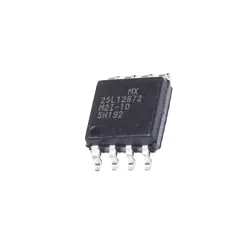
圖片僅供參考
HMC346AMS8GE
+物料清單RF ATTENUATOR 32DB 50OHM 8TSSOP
-
製造商ADI公司
-
製造商部分 #HMC346AMS8GE
-
有存貨12790
365 天品質保證
7*24 小時服務保證
90-日售後保障
正品保證
規格
| 屬性 | 價值 |
| Part Status | Active |
| Attenuation Value | 32dB |
| Frequency Range | 0 Hz ~ 8 GHz |
| Impedance | 50 Ohms |
| Package / Case | 8-TSSOP, 8-MSOP (0.118", 3.00mm Width) Exposed Pad |
| Base Product Number | HMC346 |
概述
Description
The HMC346AMS8GE is a versatile electronic component used in RF applications for controlling signal amplitude. Specifically, it is a GaAs MMIC (Gallium Arsenide Monolithic Microwave Integrated Circuit) digital attenuator designed to operate within the frequency range of DC to 8 GHz. The device provides a wide attenuation range in precise steps, making it suitable for applications requiring variable signal levels such as in communication systems, radar, and test equipment.
Key features of the HMC346AMS8GE include a 6-bit digital interface that allows for fine attenuation control in 0.5 dB steps up to 31.5 dB. This makes it highly useful for precision adjustments in signal processing tasks. The component typically operates with a 5V supply voltage and is packaged in a compact MSOP-8 package, which enhances its suitability for space-constrained applications.
The device's robust performance and reliability are advantageous for maintaining signal integrity and minimizing distortion, which are crucial in high-frequency applications. Overall, the HMC346AMS8GE is valued for its precision, versatility, and ease of integration into complex RF systems.
Key features of the HMC346AMS8GE include a 6-bit digital interface that allows for fine attenuation control in 0.5 dB steps up to 31.5 dB. This makes it highly useful for precision adjustments in signal processing tasks. The component typically operates with a 5V supply voltage and is packaged in a compact MSOP-8 package, which enhances its suitability for space-constrained applications.
The device's robust performance and reliability are advantageous for maintaining signal integrity and minimizing distortion, which are crucial in high-frequency applications. Overall, the HMC346AMS8GE is valued for its precision, versatility, and ease of integration into complex RF systems.
Equivalent
The HMC346AMS8GE is a DC to 8 GHz GaAs MMIC SPDT non-reflective switch. Equivalent products include:
1. Peregrine Semiconductor PE4259.
2. Mini-Circuits ZFSWA2-63DR+.
3. Analog Devices ADG919.
4. Skyworks SKY13350-385LF.
Always verify compatibility in terms of frequency range, insertion loss, and power handling to ensure suitability for your application.
1. Peregrine Semiconductor PE4259.
2. Mini-Circuits ZFSWA2-63DR+.
3. Analog Devices ADG919.
4. Skyworks SKY13350-385LF.
Always verify compatibility in terms of frequency range, insertion loss, and power handling to ensure suitability for your application.
Features
The HMC346AMS8GE is a voltage-variable attenuator that operates in the DC to 15 GHz frequency range. Key features include a high dynamic range with an attenuation range of 25 dB, allowing for precise control of signal levels. It provides a low insertion loss of around 2 dB, ensuring minimal signal degradation. The device is designed for a wide range of applications, including communication systems, radar, and test equipment. It features a compact MSOP8 package, making it suitable for space-constrained designs. The HMC346AMS8GE also offers excellent linearity and return loss performance, enhancing system performance and reliability. Its voltage control capability allows for simple integration into various electronic systems.
Pinout
The HMC346AMS8GE is a GaAs MMIC SPDT (Single Pole Double Throw) switch. It typically comes in an 8-lead MSOP package. The pin configuration and functions are as follows:
1. Vdd (Pin 1): Supply voltage input.
2. RFC (Pin 2): Common RF port.
3. GND (Pin 3): Ground connection.
4. RF1 (Pin 4): RF port 1.
5. GND (Pin 5): Ground connection.
6. RF2 (Pin 6): RF port 2.
7. GND (Pin 7): Ground connection.
8. CTL (Pin 8): Control voltage input to select between RF1 and RF2.
The switch is commonly used in RF and microwave applications to route signals between two paths while offering high isolation and low insertion loss. It's designed for use in systems like wireless infrastructure, test equipment, and other applications requiring reliable switching.
1. Vdd (Pin 1): Supply voltage input.
2. RFC (Pin 2): Common RF port.
3. GND (Pin 3): Ground connection.
4. RF1 (Pin 4): RF port 1.
5. GND (Pin 5): Ground connection.
6. RF2 (Pin 6): RF port 2.
7. GND (Pin 7): Ground connection.
8. CTL (Pin 8): Control voltage input to select between RF1 and RF2.
The switch is commonly used in RF and microwave applications to route signals between two paths while offering high isolation and low insertion loss. It's designed for use in systems like wireless infrastructure, test equipment, and other applications requiring reliable switching.
Manufacturer
The HMC346AMS8GE is manufactured by Analog Devices, Inc. Analog Devices is a multinational semiconductor company known for designing and manufacturing a wide range of integrated circuits, including analog, mixed-signal, and digital signal processing (DSP) components. Founded in 1965 and headquartered in Norwood, Massachusetts, Analog Devices serves numerous industries, including communications, consumer electronics, healthcare, automotive, aerospace, and industrial sectors. The company is recognized for its focus on innovation and high-performance solutions that address complex engineering challenges.
Application
The HMC346AMS8GE is a voltage-variable attenuator commonly used in RF and microwave applications. Its primary application areas include:
1. Wireless Communication Systems: To control signal levels in transmit and receive paths.
2. Test and Measurement Equipment: For signal modulation and calibration.
3. Antenna Arrays: To manage the amplitude of signals to different antenna elements.
4. Radar Systems: To adjust signal strengths for optimizing radar performance.
5. Satellite Communications: For gain control in transponders.
6. Broadcast Equipment: To maintain consistent signal quality.
It's valued for its reliable performance across a wide frequency range, making it versatile for various RF signal processing tasks.
1. Wireless Communication Systems: To control signal levels in transmit and receive paths.
2. Test and Measurement Equipment: For signal modulation and calibration.
3. Antenna Arrays: To manage the amplitude of signals to different antenna elements.
4. Radar Systems: To adjust signal strengths for optimizing radar performance.
5. Satellite Communications: For gain control in transponders.
6. Broadcast Equipment: To maintain consistent signal quality.
It's valued for its reliable performance across a wide frequency range, making it versatile for various RF signal processing tasks.
Package
The HMC346AMS8GE is housed in an 8-lead MSOP (Mini Small Outline Package) with exposed ground paddle. This package type is compact and designed for surface-mount technology, providing efficient thermal performance for RF and microwave applications.