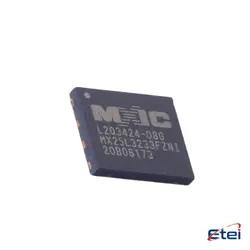
規格
| 屬性 | 價值 |
| Package / Case | Tape & Reel (TR),Cut Tape (CT) |
| Part Status | Active |
| RF Type | General Purpose |
| Frequency | 1.5GHz ~ 4.5GHz |
| Number of Mixers | 1 |
| Secondary Attributes | Up/Down Converter |
| Supply Current | 9mA |
| Mounting Type | Surface Mount |
概述
Description
The HMC213BMS8ETR is a GaAs MMIC (Monolithic Microwave Integrated Circuit) double-balanced mixer. It's utilized in RF (radio frequency) applications for signal processing, particularly in frequency conversion processes. This component operates within a frequency range of 0.1 GHz to 4 GHz, making it suitable for various communication and signal processing systems.
Key features include high isolation between the LO (local oscillator) and RF ports, which minimizes unwanted signal feedback, and a low conversion loss that enhances overall system efficiency. Its double-balanced design offers better performance in terms of spurious suppression compared to single-ended mixers.
Packaged in an MSOP-8 surface-mount configuration, the HMC213BMS8ETR is compact and easy to integrate into circuit boards. Its robust construction and reliable performance make it ideal for both commercial and military applications where space and performance are critical. The mixer is typically used in applications like cellular base stations, radar systems, and other RF communication technologies.
Key features include high isolation between the LO (local oscillator) and RF ports, which minimizes unwanted signal feedback, and a low conversion loss that enhances overall system efficiency. Its double-balanced design offers better performance in terms of spurious suppression compared to single-ended mixers.
Packaged in an MSOP-8 surface-mount configuration, the HMC213BMS8ETR is compact and easy to integrate into circuit boards. Its robust construction and reliable performance make it ideal for both commercial and military applications where space and performance are critical. The mixer is typically used in applications like cellular base stations, radar systems, and other RF communication technologies.
Equivalent
The HMC213BMS8ETR is a GaAs MMIC SMT double-balanced mixer. Equivalent products include:
1. Mini-Circuits ADE-1 (DC to 4 GHz) - popular and widely used mixer.
2. Marki Microwave M1-0212MA (2 to 12 GHz) - offers wide bandwidth.
3. Analog Devices AD831 (DC to 6 GHz) - another alternative from ADI, which now owns Hittite Microwave.
4. Skyworks SKY73021 (0.7 to 2.7 GHz) - suitable for lower frequency bands.
Ensure compatibility based on specific application requirements such as frequency range and packaging.
1. Mini-Circuits ADE-1 (DC to 4 GHz) - popular and widely used mixer.
2. Marki Microwave M1-0212MA (2 to 12 GHz) - offers wide bandwidth.
3. Analog Devices AD831 (DC to 6 GHz) - another alternative from ADI, which now owns Hittite Microwave.
4. Skyworks SKY73021 (0.7 to 2.7 GHz) - suitable for lower frequency bands.
Ensure compatibility based on specific application requirements such as frequency range and packaging.
Features
The HMC213BMS8ETR is a GaAs MMIC double-balanced mixer designed for RF and microwave applications. Key features include:
1. Frequency Range: It operates over a wide frequency range from 0.5 GHz to 12 GHz, making it versatile for various applications.
2. Conversion Loss: The mixer offers a low conversion loss of around 9 dB, enhancing the efficiency of signal processing.
3. Isolation: The device provides excellent LO to RF and LO to IF isolation, typically around 35 dB, reducing unwanted signal leakage.
4. Input IP3: It exhibits a high input third-order intercept point (IP3) of approximately 19 dBm, indicating good linearity and performance in the presence of strong interfering signals.
5. Package: The HMC213BMS8ETR comes in a compact MSOP-8 package, which is suitable for space-constrained designs.
6. Bias: It does not require external DC bias, simplifying the integration process.
These features make the HMC213BMS8ETR suitable for use in communication systems, test equipment, and radar applications, where high performance and wide frequency coverage are required.
1. Frequency Range: It operates over a wide frequency range from 0.5 GHz to 12 GHz, making it versatile for various applications.
2. Conversion Loss: The mixer offers a low conversion loss of around 9 dB, enhancing the efficiency of signal processing.
3. Isolation: The device provides excellent LO to RF and LO to IF isolation, typically around 35 dB, reducing unwanted signal leakage.
4. Input IP3: It exhibits a high input third-order intercept point (IP3) of approximately 19 dBm, indicating good linearity and performance in the presence of strong interfering signals.
5. Package: The HMC213BMS8ETR comes in a compact MSOP-8 package, which is suitable for space-constrained designs.
6. Bias: It does not require external DC bias, simplifying the integration process.
These features make the HMC213BMS8ETR suitable for use in communication systems, test equipment, and radar applications, where high performance and wide frequency coverage are required.
Pinout
The HMC213BMS8ETR is a GaAs MMIC double-balanced mixer typically used in RF and microwave applications. It is designed for high-performance upconversion or downconversion in frequency ranges from 1.8 GHz to 4 GHz.
Pin Count:
- The device comes in an 8-lead MSOP package, so it has 8 pins.
Function:
- RF (Radio Frequency): Input for the RF signal.
- LO (Local Oscillator): Input for the local oscillator signal used for frequency conversion.
- IF (Intermediate Frequency): Output for the intermediate frequency signal, which is the result of the mixing process.
- GND (Ground): Several pins are typically designated as ground to provide a return path for currents and shielding to maintain signal integrity and reduce noise.
Each pin has a specific role in the operation of the mixer, and correct pin connections are essential for optimal performance. The device's primary function is to convert frequencies for applications such as telecommunications, radar, and electronic warfare systems.
Pin Count:
- The device comes in an 8-lead MSOP package, so it has 8 pins.
Function:
- RF (Radio Frequency): Input for the RF signal.
- LO (Local Oscillator): Input for the local oscillator signal used for frequency conversion.
- IF (Intermediate Frequency): Output for the intermediate frequency signal, which is the result of the mixing process.
- GND (Ground): Several pins are typically designated as ground to provide a return path for currents and shielding to maintain signal integrity and reduce noise.
Each pin has a specific role in the operation of the mixer, and correct pin connections are essential for optimal performance. The device's primary function is to convert frequencies for applications such as telecommunications, radar, and electronic warfare systems.
Manufacturer
The HMC213BMS8ETR is manufactured by Analog Devices, Inc. Analog Devices is a multinational semiconductor company that specializes in the design and manufacturing of analog, mixed-signal, and digital signal processing integrated circuits. The company serves various industries, including communications, automotive, industrial, and consumer electronics, providing components used in a wide range of applications such as data conversion, signal processing, power management, and radio frequency (RF) solutions. Established in 1965, Analog Devices is known for its focus on innovation and has a reputation for producing high-quality and reliable semiconductor products.
Application
The HMC213BMS8ETR is a versatile RF/microwave mixer used in various applications. Its primary application areas include:
1. Wireless Communications: Facilitates signal processing in transceivers for systems like GSM, CDMA, and LTE.
2. Radar Systems: Used in both military and commercial radar applications for frequency translation.
3. Test and Measurement Equipment: Involved in frequency conversion for signal analyzers and spectrum analyzers.
4. Satellite Communication: Assists in downlink and uplink frequency conversion.
5. Electronic Warfare: Plays a role in signal interception and processing.
Its high linearity and wide bandwidth make it suitable for these demanding applications.
1. Wireless Communications: Facilitates signal processing in transceivers for systems like GSM, CDMA, and LTE.
2. Radar Systems: Used in both military and commercial radar applications for frequency translation.
3. Test and Measurement Equipment: Involved in frequency conversion for signal analyzers and spectrum analyzers.
4. Satellite Communication: Assists in downlink and uplink frequency conversion.
5. Electronic Warfare: Plays a role in signal interception and processing.
Its high linearity and wide bandwidth make it suitable for these demanding applications.
Package
The HMC213BMS8ETR is packaged in an 8-lead MSOP (Mini Small Outline Package) with an exposed pad. This type of package is compact and suitable for surface mount technology, facilitating efficient thermal management and ease of integration in RF and microwave circuit applications.