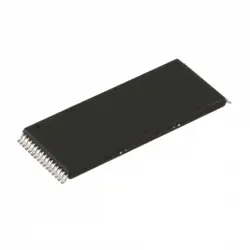
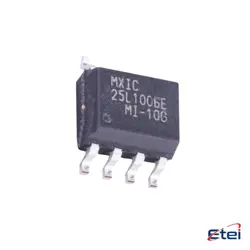
圖片僅供參考
規格
| 屬性 | 價值 |
| Manufacturer | Chipanalog |
| Package / Case | SOIC-8 |
概述
Description
"Introduction to CS48520S" is likely a course code, possibly for a specialized computer science (CS) topic. Without specific details, it may cover advanced subjects like software engineering, machine learning, or systems design. Typically, such courses focus on practical skills, theoretical foundations, or research-oriented projects.
For accurate information, check your institution’s course catalog or syllabus, as content varies by university. If CS48520S is a unique identifier (e.g., a seminar or special topic), consult the instructor or department for specifics.
Example focus areas could include:
- AI/ML: Algorithms, applications.
- Systems: Distributed computing, security.
- Software Dev: Agile methods, DevOps.
Key details to confirm: prerequisites, objectives, and assessment format (projects, exams). If this is a placeholder or typo, verify the correct course code.
For accurate information, check your institution’s course catalog or syllabus, as content varies by university. If CS48520S is a unique identifier (e.g., a seminar or special topic), consult the instructor or department for specifics.
Example focus areas could include:
- AI/ML: Algorithms, applications.
- Systems: Distributed computing, security.
- Software Dev: Agile methods, DevOps.
Key details to confirm: prerequisites, objectives, and assessment format (projects, exams). If this is a placeholder or typo, verify the correct course code.
Equivalent
The CS48520S is a CAN transceiver. Equivalent products include:
- TJA1050 (NXP)
- SN65HVD230 (TI)
- MCP2551 (Microchip)
- MAX3051 (Maxim Integrated)
These alternatives offer similar CAN bus communication functionality. Verify pin compatibility and electrical characteristics for your specific application.
- TJA1050 (NXP)
- SN65HVD230 (TI)
- MCP2551 (Microchip)
- MAX3051 (Maxim Integrated)
These alternatives offer similar CAN bus communication functionality. Verify pin compatibility and electrical characteristics for your specific application.
Application
CS48520S is a high-performance current sensor IC primarily used for precise current measurement and monitoring in various applications. Key areas include:
1. Industrial Automation – Motor control, robotics, and power management.
2. Renewable Energy – Solar inverters, battery management systems (BMS).
3. Automotive – Electric vehicles (EVs), charging systems, and powertrain control.
4. Consumer Electronics – Smart appliances and power supplies.
5. Telecommunications – Server power monitoring and UPS systems.
Its high accuracy, fast response, and compact design make it ideal for energy-efficient and safety-critical systems.
1. Industrial Automation – Motor control, robotics, and power management.
2. Renewable Energy – Solar inverters, battery management systems (BMS).
3. Automotive – Electric vehicles (EVs), charging systems, and powertrain control.
4. Consumer Electronics – Smart appliances and power supplies.
5. Telecommunications – Server power monitoring and UPS systems.
Its high accuracy, fast response, and compact design make it ideal for energy-efficient and safety-critical systems.
Package
The CS48520S is a QFN (Quad Flat No-lead) package. It features a compact, surface-mount design with exposed pads for improved thermal and electrical performance. Typical dimensions are small (e.g., 5x5mm or 6x6mm), with multiple pins along the edges. QFN packages are widely used for space-constrained applications due to their low profile and efficient heat dissipation.