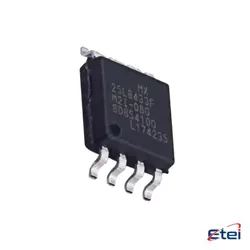
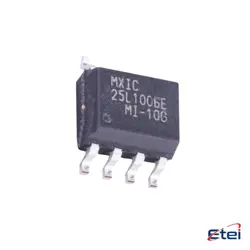
圖片僅供參考
CAT5133ZGI-10
+物料清單CAT5133 - 16 VOLT DIGITAL POTENT
-
製造商催化劑電晶體股份有限公司。
-
製造商部分 #CAT5133ZGI-10
-
有存貨5215
365 天品質保證
7*24 小時服務保證
90-日售後保障
正品保證
規格
| 屬性 | 價值 |
| Package | Bulk |
| ProductStatus | Active |
概述
Description
The CAT5133ZGI-10 is a digital potentiometer designed for applications requiring precise resistance adjustments. It features a 100-tap, non-volatile memory that retains the wiper position even after power loss, ensuring consistent performance and reliability. The device operates with a simple 2-wire I²C interface, enabling easy integration and control within a system. The potentiometer is suitable for use in a variety of applications, including audio controls, instrumentation, and power regulation.
With a compact design, the CAT5133ZGI-10 is ideal for space-constrained environments. It supports a supply voltage range typically from 2.7V to 5.5V, making it versatile for different power systems. The device provides a low-temperature coefficient and excellent linearity, ensuring accuracy in its resistance settings. Its wide operational temperature range enhances its suitability for industrial and consumer electronics.
Overall, the CAT5133ZGI-10 offers a reliable, easy-to-use solution for applications requiring adjustable resistance with memory retention capabilities, making it a popular choice for designers seeking efficient and compact digital potentiometric solutions.
With a compact design, the CAT5133ZGI-10 is ideal for space-constrained environments. It supports a supply voltage range typically from 2.7V to 5.5V, making it versatile for different power systems. The device provides a low-temperature coefficient and excellent linearity, ensuring accuracy in its resistance settings. Its wide operational temperature range enhances its suitability for industrial and consumer electronics.
Overall, the CAT5133ZGI-10 offers a reliable, easy-to-use solution for applications requiring adjustable resistance with memory retention capabilities, making it a popular choice for designers seeking efficient and compact digital potentiometric solutions.
Equivalent
The CAT5133ZGI-10 is a digital potentiometer with an I²C interface. Equivalent products include the Microchip MCP4531/4551 series, the Analog Devices AD5258, and the Texas Instruments TPL0401 series. These alternatives offer similar functionalities like non-volatile memory, similar resistance options, and digital control interfaces. Always check the specific datasheet for pin compatibility and electrical characteristics to ensure suitability for your application.
Features
The CAT5133ZGI-10 is a digitally programmable potentiometer integrated circuit from ON Semiconductor. It features a 128-position wiper setting, providing precise control over resistance adjustments in electronic circuits. This device operates through an I²C-compatible interface, enabling easy communication with microcontrollers and other digital systems.
Key features include:
- 128 taps for fine resistance adjustments.
- Non-volatile memory, retaining wiper settings even after power loss.
- Wide operating voltage range, typically from 2.7V to 5.5V.
- Low power consumption, making it suitable for battery-powered applications.
- Compact package options, facilitating space-saving designs.
The device is commonly used in applications such as volume control, sensor calibration, and adjustable power supplies. Its versatility and ease of use make it a popular choice for implementing variable resistance in various electronic projects.
Key features include:
- 128 taps for fine resistance adjustments.
- Non-volatile memory, retaining wiper settings even after power loss.
- Wide operating voltage range, typically from 2.7V to 5.5V.
- Low power consumption, making it suitable for battery-powered applications.
- Compact package options, facilitating space-saving designs.
The device is commonly used in applications such as volume control, sensor calibration, and adjustable power supplies. Its versatility and ease of use make it a popular choice for implementing variable resistance in various electronic projects.
Pinout
The CAT5133ZGI-10 is a digitally programmable potentiometer IC. It comes in an 8-pin configuration. The main function of this IC is to act as a variable resistor, controlled digitally, allowing it to adjust resistance values in circuits without the need for mechanical components.
Here is a breakdown of its pin functions:
1. VDD: Power supply pin.
2. GND: Ground connection.
3. SDA: Serial data line for I2C communication.
4. SCL: Serial clock line for I2C communication.
5. RS: Resistor output terminal.
6. RH: Resistor high terminal.
7. RL: Resistor low terminal.
8. WP: Write protect pin to prevent unwanted changes.
The CAT5133ZGI-10 is typically used in applications requiring precision resistance adjustments, such as audio equipment, measurement devices, and other consumer electronics.
Here is a breakdown of its pin functions:
1. VDD: Power supply pin.
2. GND: Ground connection.
3. SDA: Serial data line for I2C communication.
4. SCL: Serial clock line for I2C communication.
5. RS: Resistor output terminal.
6. RH: Resistor high terminal.
7. RL: Resistor low terminal.
8. WP: Write protect pin to prevent unwanted changes.
The CAT5133ZGI-10 is typically used in applications requiring precision resistance adjustments, such as audio equipment, measurement devices, and other consumer electronics.
Manufacturer
The CAT5133ZGI-10 is manufactured by ON Semiconductor. ON Semiconductor, now known as onsemi, is a leading semiconductor supplier that specializes in energy-efficient electronics. The company designs and manufactures a variety of semiconductor components used in various applications, including automotive, industrial, computing, consumer, and communications. onsemi focuses on providing high-performance solutions that help reduce energy consumption and improve efficiency across multiple industries.
Application
The CAT5133ZGI-10 is a digital potentiometer used in applications requiring precise control of analog signals. Key application areas include:
1. Volume Control: In audio equipment for adjusting sound levels.
2. Calibration: In measurement instruments for fine-tuning.
3. Signal Conditioning: In sensor circuits to adjust output levels.
4. Variable Gain Amplifiers: For setting gain in amplification circuits.
5. Power Supply Adjustment: For tuning output in power management systems.
6. LED Dimming: In lighting applications requiring adjustable brightness.
Its integration capability and precise control make it suitable for various consumer electronics, industrial automation, and communication devices.
1. Volume Control: In audio equipment for adjusting sound levels.
2. Calibration: In measurement instruments for fine-tuning.
3. Signal Conditioning: In sensor circuits to adjust output levels.
4. Variable Gain Amplifiers: For setting gain in amplification circuits.
5. Power Supply Adjustment: For tuning output in power management systems.
6. LED Dimming: In lighting applications requiring adjustable brightness.
Its integration capability and precise control make it suitable for various consumer electronics, industrial automation, and communication devices.
Package
The CAT5133ZGI-10 is typically available in an 8-lead MSOP (Micro Small Outline Package).