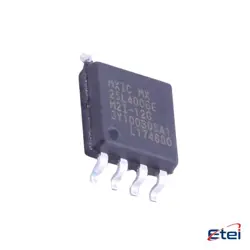
規格
| 屬性 | 價值 |
| Supplier | Rochester Electronics, LLC |
| Package / Case | Bulk |
| Part Status | Active |
| Frequency | 4.9GHz ~ 5.925GHz |
| P1d B | -4dBm |
| Gain | 15dB |
| Noise Figure | 1.6dB |
| RF Type | ISM |
| Voltage - Supply | 3V ~ 3.6V |
| Supply Current | 13mA |
| Test Frequency | 5.5GHz |
| Mounting Type | Surface Mount |
概述
Description
BGU7258115 seems to refer to a specific course code or module number, likely from a university or educational institution. However, without additional context or access to the specific institution's course catalog, it's challenging to provide a detailed description. Typically, such codes are structured where "BGU" might denote the institution or department offering the course, and "7258115" is the unique identifier for the course itself.
If this is indeed a course, an introduction would typically cover the following:
1. Course Title and Focus: What is the primary subject or field of study?
2. Objectives: What are the learning goals or outcomes for students taking the course?
3. Structure: Overview of the course structure, including lectures, labs, or seminars.
4. Prerequisites: Any required background knowledge or courses.
5. Assessment: Methods of evaluation, such as exams, projects, or papers.
6. Instructor: Who is teaching the course?
For specific information, it's best to consult the institution's course catalog or website.
If this is indeed a course, an introduction would typically cover the following:
1. Course Title and Focus: What is the primary subject or field of study?
2. Objectives: What are the learning goals or outcomes for students taking the course?
3. Structure: Overview of the course structure, including lectures, labs, or seminars.
4. Prerequisites: Any required background knowledge or courses.
5. Assessment: Methods of evaluation, such as exams, projects, or papers.
6. Instructor: Who is teaching the course?
For specific information, it's best to consult the institution's course catalog or website.
Equivalent
The BGU7258115 is a Low Noise Amplifier (LNA) IC typically used in RF applications. Equivalent products may depend on the specific requirements like frequency range, gain, noise figure, and supply voltage. Some potential alternatives might include LNAs from manufacturers like Qorvo, Skyworks, or Analog Devices. However, it's essential to compare the datasheets of each alternative to ensure compatibility with your specific application requirements. For exact equivalents, consulting the manufacturer's cross-reference tools or technical support is recommended.
Pinout
The BGU7258 is a GPS/GNSS front-end low-noise amplifier (LNA) with integrated surface acoustic wave (SAW) filters. This device typically comes in a 1.5 mm x 1.1 mm, 6-pin leadless package. Its primary function is to amplify weak GPS/GNSS signals, providing high linearity and low noise figure, which improves the overall sensitivity and performance of GPS/GNSS receivers.
The pin configuration usually includes:
1. RF input: Connects to the GPS antenna and receives the incoming signal.
2. RF output: Connects to the GPS receiver to deliver the amplified and filtered signal.
3. VCC: Power supply pin to provide the necessary voltage to the LNA.
4. GND: Ground pin(s) for electrical grounding.
5. Bypass mode/Control pin: May be used to enable or disable certain functions, such as bypassing the LNA for signal pass-through.
6. Additional control or reserve pins: Depending on the specific application or additional features.
Always consult the specific datasheet for detailed pinout and functional description.
The pin configuration usually includes:
1. RF input: Connects to the GPS antenna and receives the incoming signal.
2. RF output: Connects to the GPS receiver to deliver the amplified and filtered signal.
3. VCC: Power supply pin to provide the necessary voltage to the LNA.
4. GND: Ground pin(s) for electrical grounding.
5. Bypass mode/Control pin: May be used to enable or disable certain functions, such as bypassing the LNA for signal pass-through.
6. Additional control or reserve pins: Depending on the specific application or additional features.
Always consult the specific datasheet for detailed pinout and functional description.