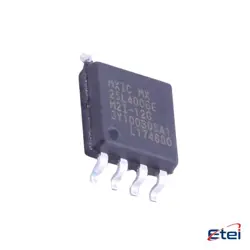
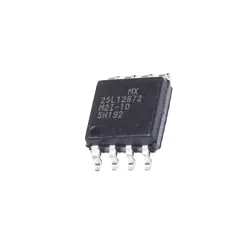
圖片僅供參考
規格
| 屬性 | 價值 |
| Manufacturer | APEC(Advanced Power Elec) |
| Package | PMPAK-8(5x6) |
| Operating Temperature | -55℃~+150℃ |
| Current - Continuous Drain(Id) | 112A |
| Pd - Power Dissipation | 69.4W |
| Drain to Source Voltage | 60V |
| RDS(on) | 3.28mΩ@10V,20A |
| Gate Threshold Voltage (Vgs(th)@Id) | 2V |
| Type | 1 N-channel |
| Gate Charge(Qg) | 99.2nC@10V |
| Input Capacitance(Ciss@Vds) | 5440pF |
| Reverse Transfer Capacitance (Crss@Vds) | 30pF@50V |
概述
Description
"Introduction to AP6NA3R2MT" likely refers to an introduction or overview of a specific topic, course, or code. However, without more context, it's difficult to determine precisely what AP6NA3R2MT represents. It might be a course code, a project identifier, a product model, or a technical specification.
If it pertains to a course, "AP6NA3R2MT" might cover specific subjects or skills related to a field such as technology, science, or engineering. In such a case, the introduction would typically outline the objectives, key topics, learning outcomes, and prerequisites.
If AP6NA3R2MT is a product or project code, the introduction might include a description of the product's features, purpose, target audience, and any unique attributes that distinguish it from similar items.
In a technical context, it might relate to a system, framework, or methodology, and the introduction would highlight its architecture, components, applications, and benefits.
For a precise introduction, additional context or clarification on what AP6NA3R2MT specifically refers to would be necessary.
If it pertains to a course, "AP6NA3R2MT" might cover specific subjects or skills related to a field such as technology, science, or engineering. In such a case, the introduction would typically outline the objectives, key topics, learning outcomes, and prerequisites.
If AP6NA3R2MT is a product or project code, the introduction might include a description of the product's features, purpose, target audience, and any unique attributes that distinguish it from similar items.
In a technical context, it might relate to a system, framework, or methodology, and the introduction would highlight its architecture, components, applications, and benefits.
For a precise introduction, additional context or clarification on what AP6NA3R2MT specifically refers to would be necessary.
Equivalent
The AP6NA3R2MT is a MOSFET transistor. To find equivalent products, look for MOSFETs with similar specifications such as voltage rating, current rating, package type, and channel type. Possible equivalents could be the NXP PSMN1R8-40YLD, Infineon IPB014N06N, or Vishay SiR158DP. Always compare datasheets to ensure compatibility with your application.
Features
The AP6NA3R2MT is a product from Omron's G9SP series, which are stand-alone safety controllers. These devices are designed to manage safety functions within industrial automation systems. Key features generally include:
1. Scalability: Suitable for small to mid-sized safety applications, allowing for system expansion as needed.
2. Flexible Configuration: Offers various I/O configurations to suit different applications, with options for digital inputs and outputs.
3. Networking Capabilities: Can integrate with other safety devices and networks, supporting protocols such as Ethernet/IP and CompoNet.
4. User-friendly Software: Configured using Omron’s programming software, which is designed to simplify setup and maintenance.
5. Safety Compliance: Meets international safety standards like ISO 13849-1 and IEC 61508, ensuring reliable operation in safety-critical applications.
6. Diagnostics and Monitoring: Provides tools for real-time diagnostics and status monitoring, enhancing maintenance efficiency.
7. Compact Design: Space-saving design ideal for panel installations.
These features make the AP6NA3R2MT a versatile and reliable choice for implementing and managing safety protocols in various manufacturing and processing environments.
1. Scalability: Suitable for small to mid-sized safety applications, allowing for system expansion as needed.
2. Flexible Configuration: Offers various I/O configurations to suit different applications, with options for digital inputs and outputs.
3. Networking Capabilities: Can integrate with other safety devices and networks, supporting protocols such as Ethernet/IP and CompoNet.
4. User-friendly Software: Configured using Omron’s programming software, which is designed to simplify setup and maintenance.
5. Safety Compliance: Meets international safety standards like ISO 13849-1 and IEC 61508, ensuring reliable operation in safety-critical applications.
6. Diagnostics and Monitoring: Provides tools for real-time diagnostics and status monitoring, enhancing maintenance efficiency.
7. Compact Design: Space-saving design ideal for panel installations.
These features make the AP6NA3R2MT a versatile and reliable choice for implementing and managing safety protocols in various manufacturing and processing environments.
Pinout
The AP6NA3R2MT is a 6-pin MOSFET transistor. This component is part of the Alpha & Omega Semiconductor's product line. The pin configuration typically includes the following:
1. Gate (G): Controls the on/off state of the MOSFET.
2. Drain (D): The terminal where the current flows out.
3. Source (S): The terminal where the current flows into the MOSFET.
4. Other pins may include additional sources, drains, or a substrate connection depending on the specific layout.
The primary function of the AP6NA3R2MT is to act as an electronic switch or amplifier in various applications. It is commonly used in power management systems, load switches, and DC-DC converters due to its efficiency in handling high current levels while maintaining low gate charge. Always refer to the specific datasheet for detailed pin configuration and electrical characteristics, as these are essential for proper integration into a circuit.
1. Gate (G): Controls the on/off state of the MOSFET.
2. Drain (D): The terminal where the current flows out.
3. Source (S): The terminal where the current flows into the MOSFET.
4. Other pins may include additional sources, drains, or a substrate connection depending on the specific layout.
The primary function of the AP6NA3R2MT is to act as an electronic switch or amplifier in various applications. It is commonly used in power management systems, load switches, and DC-DC converters due to its efficiency in handling high current levels while maintaining low gate charge. Always refer to the specific datasheet for detailed pin configuration and electrical characteristics, as these are essential for proper integration into a circuit.
Manufacturer
The AP6NA3R2MT is manufactured by Panasonic Corporation. Panasonic is a multinational electronics company headquartered in Japan. It is known for producing a wide range of electronic products, including consumer electronics, automotive systems, industrial devices, and energy solutions. The company has a strong emphasis on innovation and sustainability, and it operates in various sectors, including home appliances, batteries, and industrial components. Panasonic has a global presence and is recognized for its quality and technological advancements in the electronics industry.
Application
AP6NA3R2MT is a MOSFET transistor commonly used in power management applications. Its application areas include:
1. Power Supplies: Utilized in switch-mode power supplies for efficient energy conversion.
2. Motor Control: Employed in controlling motors in various devices due to its ability to handle high current.
3. DC-DC Converters: Integral in voltage regulation circuits for maintaining stable voltage levels.
4. LED Lighting: Used to drive LED arrays efficiently in lighting applications.
5. Battery Management: Involved in battery charging and discharging systems for efficient power usage.
These applications leverage the transistor's efficiency, high-speed switching capabilities, and robustness.
1. Power Supplies: Utilized in switch-mode power supplies for efficient energy conversion.
2. Motor Control: Employed in controlling motors in various devices due to its ability to handle high current.
3. DC-DC Converters: Integral in voltage regulation circuits for maintaining stable voltage levels.
4. LED Lighting: Used to drive LED arrays efficiently in lighting applications.
5. Battery Management: Involved in battery charging and discharging systems for efficient power usage.
These applications leverage the transistor's efficiency, high-speed switching capabilities, and robustness.